PAVO: An Offline Classroom in the Philippines’ Top 30
Our team pitched an offline classroom for Filipino learners in the national Top 30 of Enactus's Khan Academy Education Impact Challenge track.
- product-design
- education
- offline-first
Our team built PAVO around a constraint that can interrupt an entire school day. What happens to digital learning when the internet connection disappears?
PAVO reached the national Top 30 in Enactus's Khan Academy Education Impact Challenge track, where we pitched the project. We called it an offline classroom in your pocket.
A classroom that can work between connections
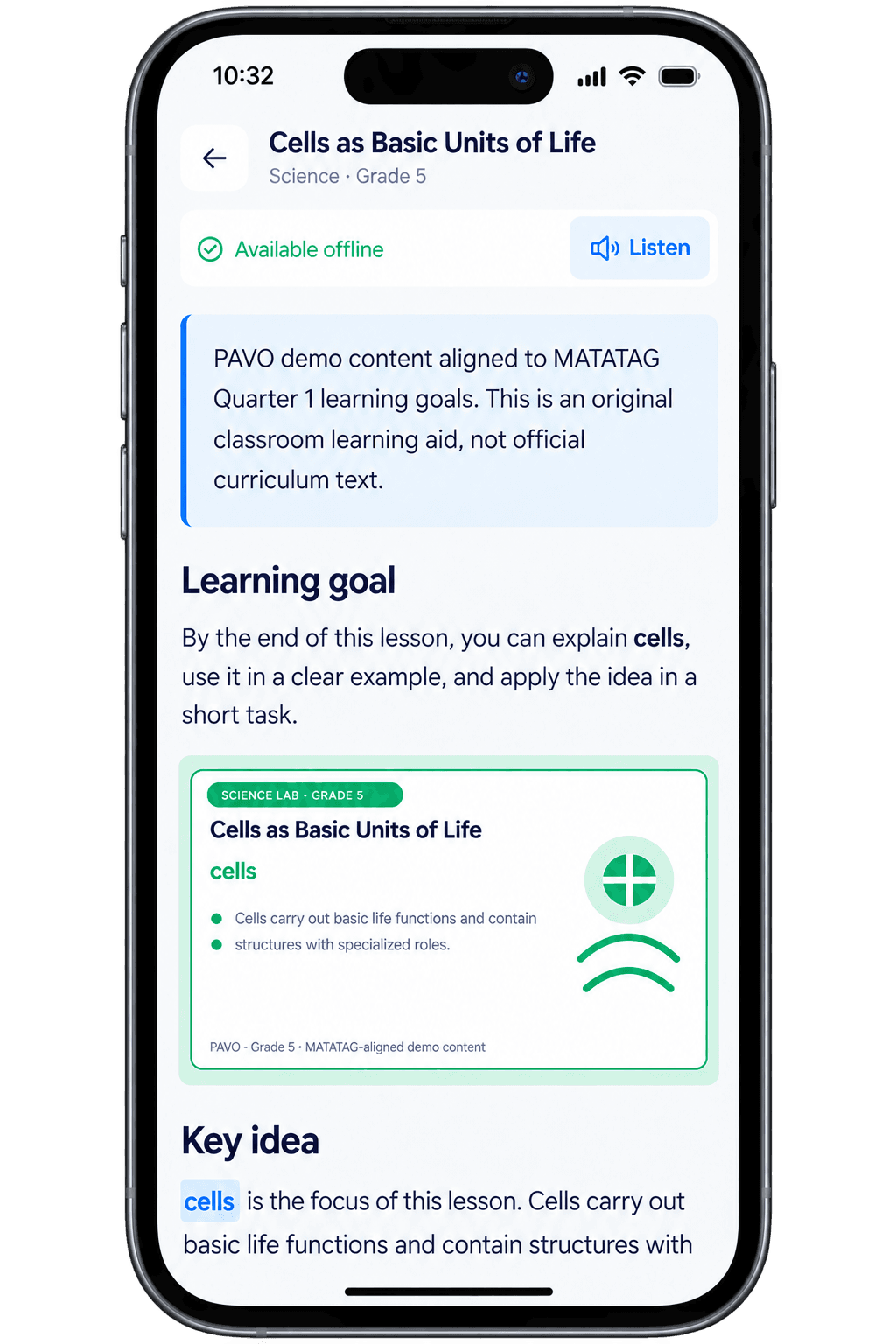
PAVO is designed for Filipino learners and teachers dealing with unreliable or expensive internet access. Its core learning workflow keeps lessons and quizzes on the phone, so students can return to saved material while offline.
The project also considers students who share a device or have no phone. Our proposal includes printed answer sheets that a teacher can photograph for grading, alongside digital quizzes. The intention is to let more students participate using the equipment their classroom already has. Project information
Moving lessons out and results back
The classroom workflow has two directions. Teachers need to distribute learning material, and they need to bring students' answers back into their records.
PAVO's proposed phone-to-phone sharing lets teachers distribute lesson packages over a nearby connection. After a digital quiz, the student's phone can show a QR code for the teacher to scan. The design keeps the answer key out of that result code.
The next part is helping teachers understand those results. PAVO is designed to show topics where students need more practice, so a teacher can decide what to review or reteach. Camera grading, topic-level support, and classroom use are workflows we intend to evaluate through further testing. Project workflow and evaluation plans
Connecting with Khan Academy
The Khan Academy track gave us a way to explain how offline study could connect with additional learning resources when a connection becomes available.
At the stage described in our submission, PAVO could store credited Khan Academy links separately from teacher-created lessons. Displaying those links in lesson screens and testing their topic matches with teachers were next steps. The proposal also described future online assistance. Our public website identifies Ask PAVO and Study Jam as features that need an internet connection. PAVO product website
Where the prototype stands
Our submission reports testing the Android prototype on an emulator and an Oppo A3s, a low-end phone released in 2018. Testing on older hardware connects directly to the project's intended audience and the devices families may already own.
The next stage described in the submission is classroom testing, followed by a pilot with partner schools. That is where we plan to measure teacher time spent checking work, student practice, and learning outcomes.
Reaching the national Top 30 gave us the opportunity to pitch that direction. PAVO's next evidence will come from how the prototype works for teachers and learners in their own classrooms. Prototype and pilot plans